

Frequently Asked Question
Traditional dry shake systems were developed for small slabs and simple concrete mixes over 100 years ago. These systems struggle on today’s large pours and modern concretes like low-carbon CEM III or fiber-reinforced mixes. They also require fast application and are vulnerable to drying, discoloration, and delamination under real-world site conditions.
Concria Optimal Slab™ is a patented system designed for large, modern floors. It combines multiple dry shake layers (up to 10 kg/m²) with Concria™ Trowel Hard, a nano-silica aid that extends finishing time, improves hydration, and bonds layers. The process uses plastic float pans and blades to eliminate surface defects. The result: a fast-installed, extremely durable, fiber-free, and visually consistent floor that meets high-performance and aesthetic demands.
Liquid hardeners like lithium or sodium silicate are surface treatments applied after concrete has cured. They densify the top 1–2 mm and slightly improve abrasion resistance—but they don’t repair poor finishing, hide exposed fibers, or offer long-term durability. Application adds time, labor, and can be inconsistent depending on porosity.
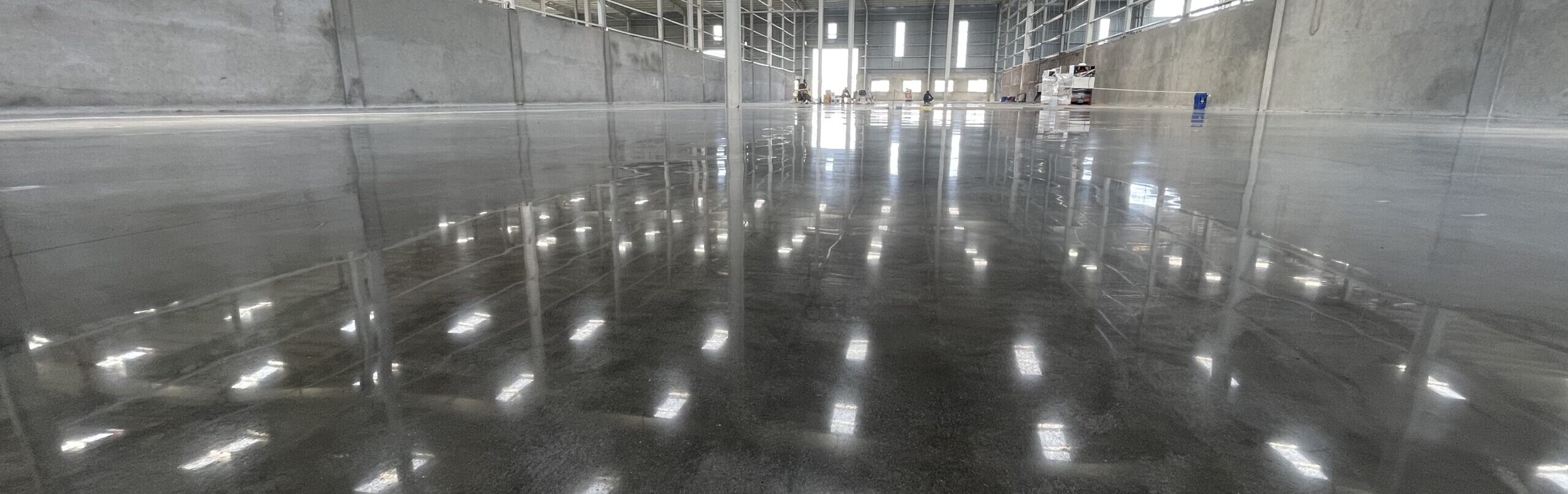
Concria Optimal Slab™ is not a treatment—it becomes part of the slab. Installed during casting, it forms a monolithic wear layer up to 4 mm thick. Using graded aggregates and Trowel Hard nano-silica, it creates a dense, hard, dust-free surface. It offers uniform color, hides fibers in SFRC, eliminates the need for silicate densifiers, and ensures long-term performance from day one.
Data centers demand surfaces that are strong, dust-free, and easy to maintain. Concria Optimal Slab™ delivers on all fronts: it provides abrasion resistance far above standard concrete (AR 0.5 / Böhme A3–A6), with a monolithic, sealed surface that resists wear from server racks, equipment, and foot traffic.
In terms of maintenance, the floor is certified for ISO 5 cleanroom use, meaning it generates no particles and has no joints, seams, or coatings that could trap dirt or fail. It resists chemicals and can be cleaned using robotic scrubbers with no special chemicals. This reduces downtime, operational risk, and the cost of maintenance over decades of use.
Sustainability is embedded in Concria’s design. It works seamlessly with low-carbon concretes like CEM III/B and 1L cements, allowing significant CO₂ reductions—up to 50% over a 20-year lifecycle compared to epoxy floors. It also enables slab designs up to 30% thinner without losing performance, reducing material consumption.
Concria requires no post-install treatments, coatings, or sealing steps—saving time, energy, and logistics. It supports faster project delivery (7–10 days vs. weeks or months) and produces long-lasting results: up to 5× the lifespan of resin systems. Light-colored finishes also increase brightness (LRV >75%), reducing lighting needs and operational energy use in large facilities.